
Over the past few weeks, many homeowners and contractors across Port St. Lucie, Fort Pierce, Jensen Beach, and surrounding Treasure Coast communities have seen something we don’t deal with often in Florida real cold weather damage to landscaping. Palms that normally thrive in our warm climate are turning brown, shrubs are drooping, and entire sections of yards are starting to look stressed or dead after the temperature drop. While the colder weather may only last a short time, the cleanup can last much longer, especially when large amounts of yard debris begin piling up all at once.
For many residents, the challenge isn’t just trimming back damaged plants it’s figuring out how to safely and efficiently dispose of the debris. Palm fronds are bulky, heavy, and awkward to move, and once they dry out, they can become sharp and difficult to handle. Contractors and homeowners alike are now facing the same question: what’s the fastest way to clean up cold-damaged landscaping without turning it into a long, stressful project?
Why Cold Snaps Hit Florida Landscaping So Hard
Florida landscapes are built around tropical and subtropical plants that rarely see freezing temperatures. When sudden cold snaps hit, palms and decorative shrubs often experience shock that causes fronds to brown, stems to weaken, and root systems to struggle. Unlike northern plants that go dormant during winter, many Florida species continue growing year-round, which makes them more vulnerable when temperatures drop quickly.
After a freeze event, damaged palms may not recover fully, and many property owners choose to remove dead fronds or entire plants to prevent hazards and improve curb appeal. This creates a sudden surge of yard debris across neighborhoods something local disposal systems are not always prepared for.
What Homeowners Should Know Before Cutting or Removing Palms
Before starting a cleanup project, it’s important to think through safety and logistics. Palm fronds can be heavier than they look, and cutting large pieces without a plan for removal often leads to piles sitting in the driveway or at the curb longer than expected. Many homeowners are surprised to learn that city bulk pickup programs may require debris to be placed in specific locations, approved in advance, or scheduled days or weeks out depending on demand.
Planning ahead helps prevent multiple trips to the landfill or overloading small trailers. For larger cleanup projects, especially when multiple palms or shrubs are affected, having a single centralized container makes the process easier and safer for everyone involved.
Bulk Pickup vs. Dumpster Rental After Cold Weather Cleanup
When cold weather hits the Treasure Coast, yard debris tends to appear across entire neighborhoods at the same time. That can slow down municipal pickup schedules, leaving homeowners waiting while piles continue to grow. Contractors working on landscaping or property cleanups also need faster turnaround times so they can keep projects moving.
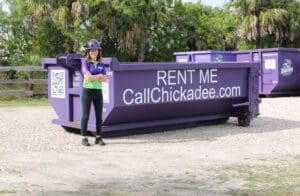
Many local residents are choosing driveway-friendly dumpsters for cold weather cleanup because they allow debris to be loaded gradually instead of rushed into piles at the curb. With a flat-rate rental period and clear weight guidelines, dumpsters give homeowners and contractors more control over how and when the cleanup happens.
What Size Dumpster Works Best for Palm Trees and Yard Debris?
Choosing the right container size depends on the amount of material being removed and how much space is available on the property. Smaller projects that involve trimming shrubs or removing a few palm fronds may fit comfortably in a 10-yard container, while larger landscaping projects or multiple tree removals often benefit from a 15- or 20-yard dumpster. Because palm debris takes up a lot of space but may not always be extremely heavy, loading technique and cutting fronds into manageable sections can make a big difference in maximizing capacity.
For contractors handling HOA cleanups or multiple homes affected by the cold snap, having a larger roll-off container onsite can reduce downtime and limit repeated trips to disposal facilities.
Local Tips from Chickadee Dumpster Rental Drivers
Drivers who work across Port St. Lucie and the Treasure Coast every day have learned a few simple tricks that make yard debris cleanup faster and safer. Cutting palm fronds into shorter lengths helps prevent overhang and makes loading easier, while laying material flat instead of stacking it upright allows more debris to fit into the container. Keeping sand and loose soil out of the dumpster whenever possible can also help homeowners stay within weight guidelines while maximizing space for landscaping waste.
These small adjustments not only improve efficiency but also help protect driveways and surrounding areas during the cleanup process.
Helping Treasure Coast Communities Recover Faster
Cold weather may be temporary in Florida, but the impact on landscaping can last for weeks as homeowners and contractors work to restore properties. Whether it’s a single backyard cleanup or a larger neighborhood project, having a clear plan for debris removal helps keep projects moving without added stress. Across the Treasure Coast, many residents are focusing on safe cleanup practices, responsible disposal, and solutions that keep neighborhoods looking their best as temperatures warm back up.
As the community works through the aftermath of this unusual cold spell, local businesses and residents continue finding ways to adapt and support one another. With the right approach and the right tools, even large-scale yard debris projects can be handled efficiently, helping properties return to their normal Florida look sooner rather than later.