
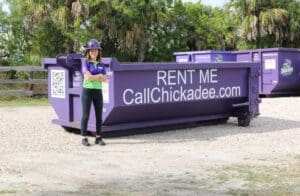
Flood Damage Cleanup in Port St. Lucie and the Treasure Coast: When You Need a Dumpster
The recent heavy rainfall and flooding across Port St. Lucie, Fort Pierce, and surrounding Treasure Coast communities have left some homeowners and businesses facing an overwhelming cleanup.
While some residents are dealing with flooded yards and standing water around their homes, others are facing something much more serious: water that has made its way inside, damaging drywall, flooring, cabinets, and other building materials.
At Chickadee Dumpster Rental, we’ve seen some of this flooding firsthand. While traveling through the area, we saw homes surrounded by approximately a foot of water. We also recently received a call from a Fort Pierce business whose commercial building had taken on more than a foot of water.
The business was preparing for an insurance adjuster to assess the damage and was already thinking ahead about having a dumpster onsite when it was time to begin removing damaged materials.
Unfortunately, situations like these are a reminder of how quickly heavy rainfall can disrupt everyday life here on the Treasure Coast.
If your home or business has experienced flood damage, knowing what steps to take before cleanup begins can help make an already stressful situation a little more manageable.
Before You Start Removing Flood-Damaged Materials
When water enters a home or commercial building, it’s understandable to want to start tearing out damaged materials immediately.
However, before removing drywall, flooring, cabinets, or other building materials, there are a few important things to consider.
1. Document the damage with photos and videos.
Before anything is removed, take pictures and videos of the affected areas if you can do so safely. Document water levels, damaged walls, flooring, cabinets, furniture, and other belongings.
This documentation may be helpful when working with your insurance company or adjuster.
2. Contact your insurance company or adjuster.
If you plan to file an insurance claim, contact your insurance provider to understand what documentation or inspections may be required before beginning demolition.
Some property owners may need an adjuster to assess the damage before removing affected building materials.
Even if you’re paying for repairs out of pocket, it’s important to understand the extent of the damage before beginning demolition.
3. Make sure the property is safe.
Floodwater can create electrical hazards, structural concerns, and possible contamination. Never enter standing water where electrical hazards may be present.
If there is any uncertainty about the safety of the building, contact qualified professionals before entering or beginning cleanup.
4. Don’t delay necessary emergency mitigation.
Waiting for an insurance inspection does not necessarily mean waiting to address active water damage. Prompt professional assessment, water removal, and drying may be needed to prevent additional damage.
Follow the guidance of your insurance company and qualified restoration professionals regarding emergency mitigation, documentation, and material removal.
5. Plan ahead for debris removal.
Once it’s safe and appropriate to begin removing damaged materials, having a roll-off dumpster available can make the cleanup process much more organized.
Rather than allowing piles of wet drywall, flooring, and other debris to accumulate around the property, materials accepted by the dumpster provider can be placed directly into the container.
What Building Materials May Need to Be Removed After Flooding?
Not everything that gets wet necessarily needs to be thrown away. The type of water, how long materials remained wet, and the extent of the damage all play a role in determining what can be safely dried or restored.
A qualified water damage restoration professional can help determine which materials may need to be removed.
Some of the common materials removed during flood damage restoration projects include:
- Drywall: Saturated drywall may lose its integrity and can be difficult to dry properly, especially when contaminated water is involved.
- Insulation: Wet insulation inside walls may need to be removed to allow proper drying and restoration.
- Flooring: Carpet, padding, laminate, vinyl, and other flooring materials may require removal depending on the damage and water exposure.
- Baseboards and trim: These materials are frequently removed during restoration work to access wet areas behind walls.
- Cabinets and vanities: Water-damaged cabinetry, especially materials that swell or deteriorate when wet, may need replacement.
- Wood studs and framing: Some framing can be dried and retained, while severely damaged or compromised materials may require replacement following professional evaluation.
- Other interior demolition debris: Damaged doors, shelving, and other accepted construction materials may also be removed during restoration.
Chickadee Dumpster Rental provides dumpsters for many types of ordinary construction and demolition debris, including drywall, wood, flooring, cabinets, and other accepted building materials.
Because floodwater may contain sewage, chemicals, or other contaminants, not all flood-damaged materials are suitable for disposal in a standard dumpster. Contact us before loading questionable materials so we can help determine whether they are accepted or require specialized disposal.
Why a 20-Yard Dumpster Is a Great Option for Flood Damage Cleanup
When removing water-damaged building materials, the amount of debris can add up surprisingly quickly.
A single room may involve removing drywall, insulation, flooring, baseboards, and cabinets. When multiple rooms or an entire commercial space are affected, the amount of debris can become substantial.
For many larger flood restoration and interior demolition projects, a 20-yard roll-off dumpster is a practical choice.
A 20-yard dumpster offers approximately 20 cubic yards of capacity and can accommodate bulky materials from projects such as:
- Interior drywall and insulation removal
- Flooring and carpet removal throughout multiple rooms
- Kitchen and bathroom demolition
- Commercial office or retail space renovations
- Larger residential water damage restoration projects
One advantage of having a dumpster onsite is that contractors can remove damaged materials and dispose of accepted debris as they work, rather than repeatedly stopping to haul materials away.
Keep in mind that wet building materials can be considerably heavier than dry debris. Dumpster weight limits still apply, so it’s important to discuss the project and expected materials before selecting a container.
For smaller restoration projects, Chickadee also offers 10-yard and 15-yard dumpsters.
Flood Damage Cleanup for Fort Pierce Businesses and Commercial Buildings
Flood damage isn’t limited to residential properties.
Commercial buildings, offices, retail spaces, and other businesses can experience extensive damage when water enters the building.
Recently, a Fort Pierce business contacted Chickadee Dumpster Rental after reporting more than a foot of water inside its commercial building.
With an insurance adjuster scheduled to evaluate the damage, the business was already planning for the removal of affected materials once the appropriate steps had been completed.
For business owners, planning ahead for debris removal can help make the transition from damage assessment to restoration more manageable.
Whether a contractor is removing damaged flooring from an office or clearing out drywall and office furniture from a commercial building, having an appropriately sized dumpster available can help keep the work area organized.
We regularly work with contractors throughout the Treasure Coast and understand the importance of communication, flexibility, and timely dumpster service.
Need a Dumpster Quickly? Chickadee Is Available Seven Days a Week
When restoration work is ready to begin, waiting several days for a dumpster can create unnecessary delays.
At Chickadee Dumpster Rental, we understand that flood damage cleanup doesn’t always happen on a convenient schedule.
That’s why we offer:
- Same-day dumpster delivery when availability allows
- Next-day delivery options
- Saturday and Sunday service without additional weekend fees
- Dumpster pickups and exchanges, including weekends
- Driveway and surface protection included
- No surprise mileage or credit card processing fees
- Responsive communication with homeowners, businesses, and contractors
We know that cleanup plans can change, especially when insurance inspections, restoration companies, and multiple contractors are involved.
Our goal is to make the dumpster rental portion of the process as straightforward as possible.
Our Treasure Coast Neighbors Are More Than Just Customers
Chickadee Dumpster Rental is a family-owned local business, and the Treasure Coast is our home.
After seeing the flooding throughout our communities, we recently reached out to let our neighbors know that we’re here to help where we safely can.
With our larger trucks, we offered to assist residents affected by flooding who may be having difficulty obtaining essential supplies, such as medications, diapers, or baby formula.
Not every situation calls for a dumpster, and not every problem is something we can solve. But sometimes being a good neighbor simply means offering a helping hand when someone needs it.
We’re grateful to be part of this community, and we hope everyone affected by the recent flooding is able to recover safely.
Dumpster Rentals for Flood Cleanup in Port St. Lucie, Fort Pierce, and the Treasure Coast
Whether you’re a homeowner preparing to remove water-damaged flooring, a restoration contractor tackling interior demolition, or a business owner planning repairs after flooding, Chickadee Dumpster Rental is here to help with the debris removal portion of your project.
We provide roll-off dumpster rentals throughout Port St. Lucie, Fort Pierce, Stuart, Jensen Beach, Vero Beach, and surrounding Treasure Coast communities.
Our 20-yard dumpsters are especially well suited for many larger interior cleanup and restoration projects, with smaller containers available when appropriate.
Need a dumpster for flood damage cleanup?
Give Chickadee Dumpster Rental a call or send us a message. Tell us a little about the damage, the materials being removed, and when you expect cleanup to begin.
We’ll help you choose an appropriate dumpster and coordinate delivery around your project.
Call Chickadee. We’re here for our neighbors.
Please note: Chickadee Dumpster Rental provides roll-off dumpster rental and accepted debris disposal services. We are not a water damage restoration company, mold remediation specialist, structural engineer, or insurance professional. For questions about property safety, cleanup procedures, or insurance claims, consult the appropriate qualified professionals.