
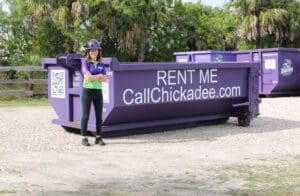
Most household junk, construction debris, furniture, flooring, roofing materials, and remodeling debris can go in a rental dumpster. Some materials have special disposal rules or additional fees. At Chickadee Dumpster Rental, tires are allowed for an additional disposal fee, while items such as hazardous chemicals and certain liquids cannot be placed in our dumpsters. If you’re unsure about an item, ask us before loading it and we’ll tell you exactly how it needs to be handled.
What Can You Put in a Rental Dumpster?
You can put most common household junk, construction and remodeling debris, furniture, flooring, roofing materials, wood, drywall, cabinets, and many other non-hazardous materials in a rental dumpster. What matters most is the type and weight of the material, because some heavy materials require a specific dumpster or disposal method.
Common items we regularly haul include:
- Furniture and household junk
- Wood and lumber
- Drywall
- Cabinets and vanities
- Carpet and vinyl flooring
- Ceramic and porcelain tile: Tile can go in a dumpster, but because it is extremely heavy, the amount and type of tile matter. For larger tile-removal projects, we may recommend a dedicated heavy-material dumpster.
- Roofing shingles and roofing debris
- Remodeling and construction debris
- Yard debris
- Appliances that meet local disposal requirements
What Can’t You Put in a Rental Dumpster?
Hazardous chemicals, flammable liquids, oil-based paints, propane tanks, and other hazardous materials should not be placed in a rental dumpster. Some items, such as tires, may be accepted but have an additional disposal fee. Disposal rules can also vary by material and facility, so it’s always best to ask before loading anything you’re unsure about.
- Hazardous chemicals
- Gasoline and other fuels
- Motor oil
- Oil-based paints
- Propane tanks
- Pesticides and herbicides
- Batteries
- Medical waste
- Asbestos or materials suspected to contain asbestos
- Wet paint, solvents, and other flammable liquids
Some items aren’t prohibited but may require special handling or additional disposal fees. Tires, for example, are accepted by Chickadee for an additional disposal fee.
Can You Mix Different Materials in a Rental Dumpster?
Yes, you can usually mix different types of household junk and construction debris in the same dumpster. For example, customers often combine wood, drywall, cabinets, carpet, vinyl flooring, and other remodeling debris. The exception is heavy materials such as concrete, dirt, pavers, and certain types of stone, which may need to be kept separate because of weight and disposal requirements.
Does the Weight of the Material Matter in a Dumpster?
Yes. A dumpster can run out of safe weight capacity before it runs out of space. Heavy materials such as concrete, dirt, pavers, tile, and stone can add thousands of pounds quickly. That’s why we ask what you’re throwing away before recommending a dumpster. The right size isn’t always about how much debris you have. It’s also about what that debris weighs. We see this firsthand with flooring removal jobs. Ceramic and porcelain tile can look like there’s plenty of room left in the dumpster, but the load can already be extremely heavy. That’s why we ask customers what materials they’re removing and approximately how much before recommending a dumpster. Sometimes separating heavy material from lighter remodeling debris can also be the more cost-effective way to handle the project.
The Top 3 Items People Always Try to Put in Dumpsters (But Can’t)
Tires: Tires are not allowed in our dumpsters, but we can dispose of them for an additional fee of $20 per tire.
Oil-based paints trigger DOT regulations and hazmat requirements that prevent standard disposal. Even paint cans that look empty contain residue that makes them prohibited.
Propane tanks create safety hazards that require special handling, whether they’re large tanks or small cylinders from your grill.
These restrictions exist because customers think dumpsters can take everything, but these rules protect safety and environmental standards.
Sneaky Items That Seem Harmless But Are Actually Prohibited
Tires look like regular waste but aren’t — they’re the most common mistake I see. People toss them in thinking they’re just rubber, but landfills won’t accept them.
Paint cans that seem empty still contain residue that makes them hazardous waste. Even latex paint becomes prohibited once it’s dried and hardened in the can.
Small propane cylinders from grills catch people off guard. They look harmless sitting next to other metal items, but they create serious safety risks during transport and compaction.
What Happens When You Load Your Dumpster Incorrectly
The marina customer put all their prohibited items on the bottom with no communication, so they were billed additional costs — which could have been avoided by communicating about prohibited items beforehand.
Additional charges for prohibited items vary depending on what we find and how much extra handling is required. Clear communication upfront prevents these surprise costs.
When customers call ahead about questionable items, we can often suggest alternatives or work out special arrangements.
How to Avoid Extra Charges and Maximize Your Dumpster Space
Make sure all spaces are completely full and don’t go over the max fill line. We call it “trash tetris” to get the most out of every rental.
One customer told me they hated dumpster rental companies, but after more than two years of using our services, they’re still with us on all their large-scale projects. They hated dumpster companies because they were getting billed for mixed materials — they didn’t know they could save money by separating tile from roofing projects and pay about half the price.
Talking to your waste hauler about your project saves money and prevents problems.
Where to Dispose of Prohibited Items Instead
Your county handles hazardous waste disposal once or twice a year. Check your county or city website for accurate dates for these collection events.
Tire recycling programs operate separately from regular waste collection. Many tire shops accept old tires when you buy new ones, and some municipalities run dedicated tire collection days.
The EPA provides guidance on household hazardous waste disposal options in your area, including year-round drop-off locations for items like paint and batteries.
How to Check What’s Allowed Before You Rent
We place stickers on every dumpster showing what’s not allowed, and I recommend checking our FAQ section before renting. Give us a call to verify questionable items and avoid additional charges for prohibited materials.
Ready to Rent? Know Before You Load
Check our complete prohibited items list or give us a call to verify what you can put in your rental dumpster before your rental. Smart loading prevents extra charges and keeps your project on budget.
For more project planning tips, check out our complete dumpster rental guide with sizing recommendations and cost breakdowns for different types of work.